A Personal Note
from Memedi
Founder @ A Level Alliances LLC | Visionary
| Demand Architect | People First. Allies Always.
I am introducing the people here not just as colleagues, but as individuals who have shaped my thinking, challenged my assumptions, and stood by me at pivotal moments across three continents and three careers.
My professional journey, spanning from Europe to Asia and now to the United States, has been about building things at the intersections of cultures, industries, and disciplines. Civic Third Space is a direct continuation of that path. It's not a single space or concept, but a vibrant platform shaped by the insight, integrity, and encouragement of trusted friends and respected business leaders.
With intent and discipline, and with the support of these allies, Civic Third Space will enter the market in the first months of 2026 — initially quietly, then with a series of deliberate surprises. Like a famous television host preparing backstage every day for their evening show, we are quietly preparing. Every day, we step into the market with a new "program," a new experience, and a renewed reason for people to come together.
Our goal is clear: to present the interiors and exteriors of our spaces as a stage designed for the shaping of people, ideas, and communities.
This philosophy is reflected in the principles that guide everything we build:
People first. Always allies.
We're not just filling in the blanks — we're setting the stage for the next step.
I offer my sincere thanks to my friends who support this vision and to the business leaders who have inspired my professional life. This project carries their impact forward.
I would like to express my gratitude, in alphabetical order, to all my friends who have contributed, touched, influenced, criticized, inspired, and departed.


Allen Gasper
General Manager of Sales and Operations
Graphic Trends, Inc. | Full-Time (Jan 2005 – Present)
Allen Gasper oversees the operational efficiency of a high-quality, fast-paced print and display production facility, supporting top-tier customer relationships, revenue performance, business development, and team growth across both established and emerging brands.
An Insight Story:
Allen contributed to Civic Third Space by asking the right questions at critical stages and applying a highly analytical, practical mindset. His experience in retail display and sales optimization helped Third Space navigate more effective implementation channels. Known for his directness and honesty, Allen offered straightforward opinions, clearly identifying unsuitable vendors or manufacturer groups, ensuring long-term compliance and disciplined decision-making.


Doug Rauch
Founder & President, Daily Table
Former President, Trader Joe’s Company
Doug Rauch worked at Trader Joe's for 31 years, serving as president for 14 of those years. During this time, he helped transform the company from a nine-store regional chain into a nationally recognized retail brand. He developed Trader Joe's purchasing philosophy, created the private label food program, and drafted the national expansion business plan. He is also the founder and president of Daily Table, an innovative, non-profit retail model that addresses food insecurity and nutritional issues by providing affordable and dignified access to high-quality food.
An Insight Story:
Doug Rauch brings a rare combination of retail expertise and mission-driven leadership to Civic Third Space. His experience building Trader Joe's into a trusted, community-centric brand reinforces the importance of authenticity, disciplined simplicity, and customer respect in physical spaces.
Through Daily Table, Doug demonstrated how retail can function as a civic infrastructure that meets real human needs while maintaining economic sustainability. His perspective helped Civic Third Space prove its validity as a platform that creates spaces designed not just to sell, but to serve, where purpose, trust, and operational excellence coexist.

Bill Duhamel
Investment Partner
Route One Investment Company, L.P.
Bill Duhamel is an experienced investment professional with over 30 years of experience in Silicon Valley, working at the intersection of technology, capital, and innovation-driven growth.
An Insight Story:
Bill Duhamel's guidance to the Civic Third Space team was clear and unwavering: AI-focused projects attract significant investor interest, but true long-term value lies at the intersection of the physical and digital worlds. Drawing on his 30 years of experience in Silicon Valley, he quickly recognized the importance of creating spaces where artificial intelligence meets human interaction.
From day one, Bill strongly supported the Civic Third Space and PEIT vision, emphasizing that creating environments where technology strengthens, rather than replaces, human relationships was an attractive and distinctive investment thesis. His perspective helped validate the strategic direction of building a structure at the intersection of AI, people, and space.

.png)

Gordon Shaw
Partner, EQT Group
MIT Alum | Hong Kong SAR
Gordon Shaw is a partner at EQT Group and has a strong background in institutional investment and global markets. He is a graduate of the Massachusetts Institute of Technology and has extensive experience in Asia and the United States.
An Insight Story:
Throughout our more than 25-year friendship, Gordon Shaw recognized in me the difficulty and rarity of creating true synergy between seemingly unrelated fields. While he viewed the U.S. retail sector as a high-risk environment, he quickly realized that preparing physical spaces for the future of retail placed Civic Third Space on his strategic radar. He openly expressed his confidence that this interdisciplinary approach would result in a first-of-its-kind concept reflecting mutual respect for vision and long-term thinking.


Hakan Bulgurlu
Chief Executive Officer, Beko
President, APPLiA | Member, WEF CEO Climate Alliance
Hakan Bulgurlu is the CEO of Beko, Europe’s number one home appliance company and a global sustainability leader. Beko ranks 17th on TIME magazine’s list of the world’s most sustainable companies. Bulgurlu chairs APPLiA, which represents European home appliance manufacturers, and is a member of the World Economic Forum’s CEO Climate Alliance. He is also the author of A Mountain to Climb and will soon publish a new book focusing on climate risk and systemic resilience.
An Insight Story:
Hakan Bulgurlu was one of the first to see the Civic Third Space as "the store version of street furniture." This simple yet powerful description reflected both its public nature and the difficulty of its implementation. Having witnessed my approach to the risks firsthand, Hakan nicknamed me "the first man to eat crab" in China. He understood very well the challenge of pioneering untested models.
Hakan acknowledged the scale and complexity of the vision with clarity and conviction, and with rare words of encouragement, he explicitly stated that Memedi was the only one who could realize such a concept. The perspective based on global leadership, sustainability, and resilience provided meaningful validation at the most ambitious level of the Civic Third Space.
Paul Chapuis
Founder & CEO, OnQ Inc.
Co-Founder, Converge Retail | Forbes Contributor | Keynote Speaker
Paul Chapuis founded OnQ in 2004 and played a key role in shaping how complex technologies are deployed and experienced in retail environments. He later founded Converge Retail to bridge the gap between physical and digital retail through integrated software and hardware solutions. Throughout his career, he held senior retail channel leadership roles at Logitech, Adobe, Gillette, and Kodak, and was directly responsible for hundreds of thousands of in-store displays across North America.
An Insight Story:
There's a saying in Turkish that's passed down like an inheritance: "Don't earn money, earn people. Money can always be earned, but people are rare." Paul Chapuis embodies this first and most valuable acquisition. A creative, visionary founder driven by deep passion, Paul was one of the earliest believers not only in the concept but also in the trust in Civic Third Space.
By hosting the first Civic Third Space workshop and summit at the OnQ factory in Akron, he opened both his space and community to this vision. Beyond his professional expertise, Paul's belief in culture, creativity, and human relationships aligns directly with the spirit of Civic Third Space. Getting to know Paul and earning his trust is one of the most meaningful foundations of this journey.


Peri Demestisha
Head of Real Estate Growth, North America, Industrious
Attorney | Former Jamestown Executive
Peri Demestihas manages real estate growth and nationwide partnership and lease structuring for Industrious across North America. With a legal education and experience as a manager in Jamestown, Demestihas possesses deep corporate expertise in flexible workspaces, real estate strategy, and large-scale partnership development. Industrious has emerged as one of the industry's leading operators and was acquired by CBRE in 2025 for approximately $800 million.
An Insight Story:
Peri Demestihas was one of the strongest forces enabling Civic Third Space to move from its planning stages to action, and, in her own words, encouraged it to "get started swimming." What began as a friendship evolved into a serious business relationship, and became even more meaningful with a Turkish-Greek coalition built on trust, sincerity, and mutual respect.
Having gained firsthand experience in a market heavily impacted by major players like WeWork and Regus, Peri saw Industrious as a major success in this category and applied the same clarity to Civic Third Space. Her candid critiques, strategic push, and forward-looking perspective played a key role in accelerating the development process and making the model viable in the real world.


Robert Heggie
Managing Director
Non-Traditional Retail Inc. / HK Retail Concepts
Robert Heggie is a retail innovation leader with experience in real estate management and senior retail leadership at Hudson's Bay Company. He spearheaded licensed departments and Pop-Up Retail programs and made significant contributions to the growth of brands such as MAC Cosmetics. He later founded HK Retail Concepts and Non-Traditional Retail, Inc., consulting for major retailers such as Walmart, Target, and Hudson's Bay, and supporting Walmart's entry into the Canadian market. His experience also includes teaching as a visiting lecturer at UCLA and being invited to the White House.
An Insight Story:
Robert Heggie brought his deep and practical expertise in unconventional and in-store retail models to the Civic Third Space vision. Having spent decades designing, launching, and scaling retail concepts in complex physical environments, Heggie immediately understood the operational and commercial implications of combining public space with retail logic.
His perspective helped strengthen Civic Third Space as a platform where pop-up, licensed, and third-party retail formats could coexist within a structured, investment-ready framework. Robert's contribution lies in grounding the concept in proven retail mechanisms while fostering innovation beyond traditional store formats.


Tony Fuller
Partner, The Barnabas Team
Former Senior Executive, Walmart
Tony Fuller is a senior executive with a distinguished 30-year career at Walmart. He has held numerous leadership positions and served as a trusted advisor to the company's CEOs. His expertise encompasses real estate development, procurement, sustainability, store operations, and large-scale portfolio management. Under his leadership, teams have expanded Walmart's global footprint from fewer than 1,000 stores in 20 states to nearly 10,000 stores in 23 countries. This expansion included the redevelopment and divestiture of over 200 million square feet of retail space to support Supercenter's growth.
An Insight Story:
Tony Fuller has contributed to the Civic Third Space vision by bringing a unique perspective on scale, operational discipline, and real estate practices. His experience managing one of the world's largest retail portfolios has provided valuable context on how physical assets, cost optimization, and long-term infrastructure planning need to be aligned to support sustainable growth.
Tony's guidance helped reinforce the importance of designing Civic Third Space not just as a community-focused concept, but also as a model that could reliably operate at large scale, where governance, efficiency, and real estate strategy worked together harmoniously.


Inspiring People
I wish long lives to those who are still with us, and mercy and peace to those who have passed away.
With respect and gratitude, I thank those who shaped my perspective on work and life — especially those who taught me that true impact comes from intention, not extremism.
Ray Kroc is at the forefront of these. His legacy demonstrated that luxury can be democratized, mediocrity can be elevated to perfection, and service and commerce—when conducted with discipline and respect—can be honorable, even sacred pursuits. His life serves as a powerful example of patience, perseverance, and unwavering faith in the process.
Alongside him are the other unsung heroes of my professional journey: leaders who proved that consistency is more important than speed, that humility is scalable, and that resilience is often more important than intelligence.
This project builds upon their lessons: to serve with care, to build with discipline, and to remain steadfast when the road is long.
With my deepest respect,
Memedi


A Story of Determination and Persistence
Ray Kroc
Ray Kroc didn't build his legacy early in life. He discovered it late — after decades of rejection, failure, and ordinary jobs requiring extraordinary resilience. Long before McDonald's became a global icon, Kroc was a struggling salesman, constantly traveling, believing in systems and consistency, yet the world ignored him.
What set Ray Kroc apart was not his inventions, but his determination. Where others saw limitations, he saw potential. He believed that discipline could be scaled, that simplicity could surpass complexity, and that service performed consistently every day could earn him considerable trust.
His resolve was tested repeatedly: financially, personally, and professionally. Yet he remained resilient and improved upon the system rather than abandoning it. Kroc understood that success is not a momentary event, but a sustained process over time. He proved his famous quote, that nothing in the world can replace resolve, with his life.
From Ray Kroc, I learned that resistance isn't noisy. Resistance is patient. Progress is made through repetition, not shortcuts. When determination is combined with faith in people and the process, even the mundane can become something lasting.
With respect to this man whose determination became a role model.

Democratization of Luxury
Robert Mondavi
Robert Mondavi was a visionary who changed not just an industry, but a mindset. Before him, wine was largely reserved for select tables, remote vineyards, and daunting traditions. Mondavi believed that wine belonged elsewhere, in everyday meals, family kitchens, and within the reach of ordinary people.
His determination was to elevate quality without creating obstacles. He proved that excellence doesn't require privilege and that craftsmanship can be scaled without losing its spirit. By combining discipline, storytelling, and a focus on quality, he brought wine from the cellars of experts to the homes and memories of millions.
Mondavi transformed wine from a status symbol into a shared experience, from something to be solved to something to be enjoyed. He made luxury accessible, humane, and cultural.
From Robert Mondavi, I learned that true leadership is about expanding access, not guarding doors. Luxury doesn't lose its value; it gains meaning when democratized with integrity.

.jpeg)
Power of Application
Amancio Ortega
Amancio Ortega didn't set out to create a luxury brand. He set out to deliver service with precision, timing, and discipline, time and again. While others invested in image, he invested in systems. While competitors followed trends, he mastered the ability to respond to trends.
Zara wasn't built on advertising or desires. It was built on an almost obsessive focus on how quickly an idea could transform from observation to reality. Design, production, and retail were treated as a single organism, so that the stores could continuously evolve, almost invisibly, in harmony with real people and real lives.
What set Ortega apart wasn't his taste, but his persistence. He understood that value is created not when something is imagined, but when it is executed consistently, scaled, and seamlessly. By shortening feedback loops and staying close to the customer, he transformed everyday clothing into something reliable, relevant, and quietly self-assured.
Civic Third Space learns a clear lesson from Amancio Ortega and Zara: vision is important, but execution determines reality. Spaces, like systems, earn trust not through promises, but through daily performance.


Seeing the Void Before It Even Emerges
Mark Dixon
Mark Dixon didn't invent offices. He realized why and when people stopped wanting old-style offices.
Long before flexibility became a corporate necessity, Dixon understood that work was becoming mobile, fragmented, and global. He realized that professionals didn't need to own a space; they needed access, choice, and reliability. It wasn't where you worked that mattered, but how easily the job could follow you.
By building a global network instead of isolated locations, it transformed real estate into a service layer. Regus wasn't about desks or rentals; it was about eliminating friction within the business itself. Quietly, methodically, city by city, the system expanded and met demand before it fully emerged.
Civic Third Space learns a key lesson from Mark Dixon: When space adapts faster than behavior, it becomes infrastructure. When infrastructure is designed with flexibility in mind, scale becomes an outcome, not a risk.


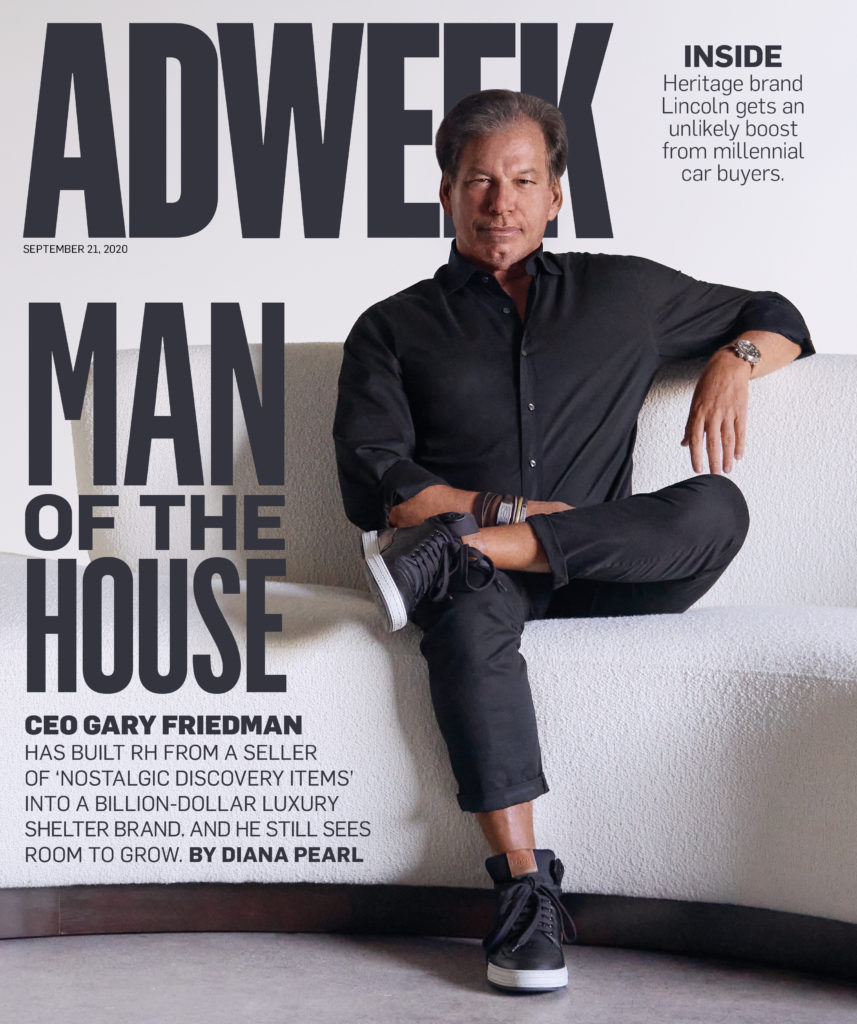
Gary Friedman
Gary Friedman transformed Restoration Hardware by refusing to view retail as a transaction. Instead, he treated retail as an experience, atmosphere, and emotion. Furniture was no longer a product category; it slowly, deliberately, and on a large scale became part of a lifestyle narrative.
By transforming stores into galleries and showrooms into destinations, Friedman redefined space as a place for pausing, dreaming, and fostering a sense of belonging. He understood that people buy not just objects, but context as well. Lighting, volume, silence, and proportion were as important as the product itself.
What distinguished his approach was patience. Instead of chasing trends, he created environments that invited time. The spaces didn't rush customers; they welcomed them. Retail became more about becoming an entity than a transformation.
In the same quiet ascent, the Civic Third Space treats space as more than just a vehicle. When the environment is deliberately designed, it becomes the backdrop for human moments; everyday activities deepen, and ordinary times feel thoughtful.

Knowing exactly who it's for
Joe Coulombe
Joe Coulombe founded Trader Joe's by perfectly implementing one decision: He chose who his customers were and ignored everyone else. At a time when the retail industry was trying to cater to all tastes, he focused on a specific, intelligent, curious, and value-conscious audience and designed everything around them.
He believed people didn't need endless options, they needed good judgment. By choosing instead of accumulating, he confidently replaced confusion. The store felt humane, friendly, and quietly self-assured; never overwhelming or distant.
Coulombe understood that culture was more important than scale. Humor, storytelling, and sincerity were operational principles, not marketing tools. The result was a place where people returned not out of habit, but because of comfort.
In the same vein, Civic Third Space wasn't designed for everyone at the same time. It was designed to feel right to the people who walk in — its intention is clear, its tone warm, and its content deliberate. When a space knows who it serves, belonging comes naturally.


Deliberately Breaking the Box
Elon Musk
Entering the automotive market is difficult. Entering with an entirely new brand of electric vehicle is even more difficult. To enter with a radically unconventional pickup truck – entering the heart of the US market where pickup trucks are a symbol of power, identity and tradition – is something only Elon Musk would dare to do.
In a segment dominated by hundreds of car brands and giants for decades, Elon Musk chose to enter the space with the Cybertruck. Not carefully. Not gradually. But with a revolutionary design that reset expectations overnight. At that moment, it reflected the quiet confidence of Joe Coulombe at Trader Joe's; the confidence of someone who knew he wasn't just competing, he was changing the rules.
With the Cybertruck, Elon didn't ask for permission. He had already rewritten the game book by the time it arrived. Whatever he decides to do next, launching such a vehicle and watching it sell millions is proof that belief can transcend tradition. It's a bold move. It's illogical by traditional standards. And it works.
You may have noticed I haven't mentioned Steve Jobs. That's intentional. I'm keeping him to myself. But if I were to share a lesson he left me, it's this: explaining your vision to people is often harder than teaching a camel to jump over a ditch. That truth stays with me like a lasting mark.
Elon Musk and Steve Jobs feel like they've come from another planet — visitors to our planet, acting according to different laws of physics and beliefs. When you see a Cybertruck on the road, I ask one thing of you: remember me for a moment. Remember that someone dreamed it, built it, launched it, and the world watched it happen.
Isn't this madness?
And doesn't progress initially look exactly like this?
— Memedi

